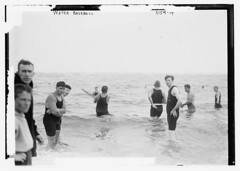
Water baseball [Men playing baseball in
surf.] 27 July 1914 (LOC)
Originally uploaded by
The Library of Congress
This is my very first East Coast sunrise at a beach - a thrilling experience to see the sun coming up from the ocean and not at all too early to see (6:13 am). I wonder if there is a green flash right before the sun comes up.It reminded me of my feelings watching sunsets in Hawaii, and thinking it odd that the sun should disappear into the water like that.
 I took a long, hot walk through Boston on the Saturday of my stay in Massachusetts. I wanted to see a bit of the Freedom Trail and wander around Boston Common.
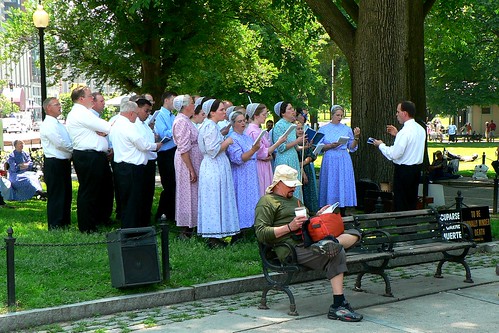 I followed trail to Boston Common, a 50-acre park in the center of the city that dates from the 1630s. It is the oldest city park in the US and fronts the Massachusetts State House, which also proudly wore Celtics green. The Common was filled with picnickers and tourists, Tai Chi'ers and free-speech activists, and an old-format religious group singing and preaching to a crowd that included listeners and ignorers in about equal measure.
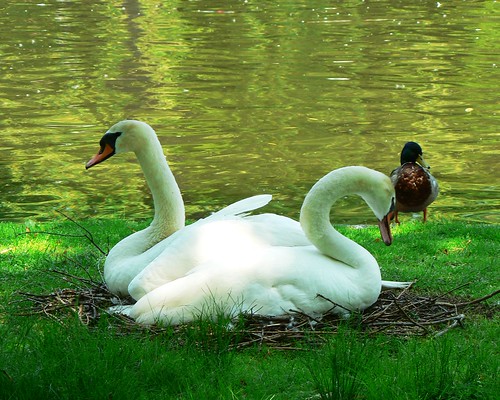 There was a watercolor painting workshop under way in the Garden. I kept wandering past painters hard at work and wise enough to stay in the shade.
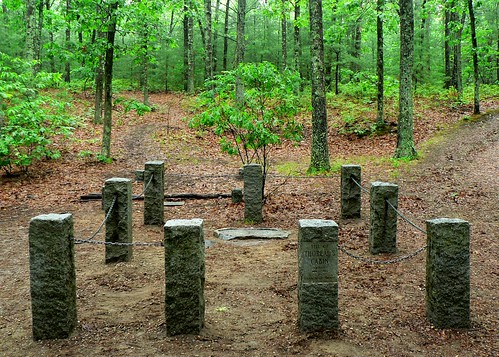 On the Friday of my Boston sojourn, I went to Walden Pond to visit the site of the cabin that Henry David Thoreau built in 1845 as part of his experiment in simple living. He wrote about the two years he lived in that cabin in Walden, Or Life in the Woods, published in 1854.
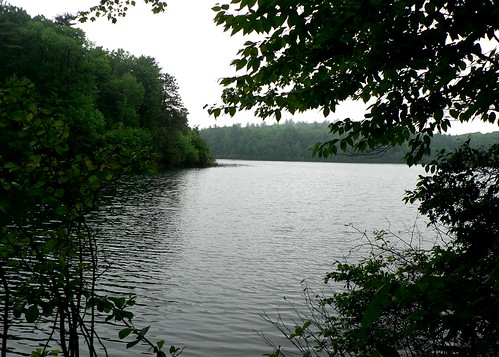 Starting in the 1870s, friends and followers of Thoreau started to visit the site they thought had been where Thoreau lived and wrote (they were off by a bit) and began a tradition of leaving behind a stone in memory and tribute. There is now a sizable pile of stones.
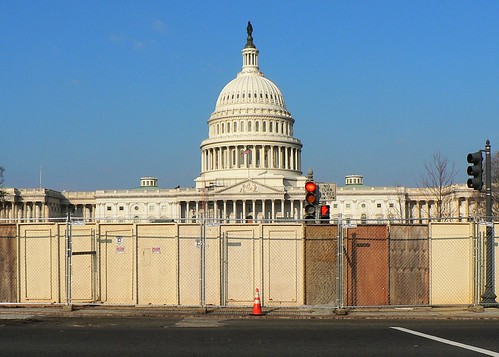 I had a few hours to wander around Capitol Hill on Wednesday; after a breakfast meeting and before boarding a bus back to Annapolis. A colleague and I played "tourists in ties" as we walked around the Capitol, past the Supreme Court and Library of Congress, and down the Mall a short way.
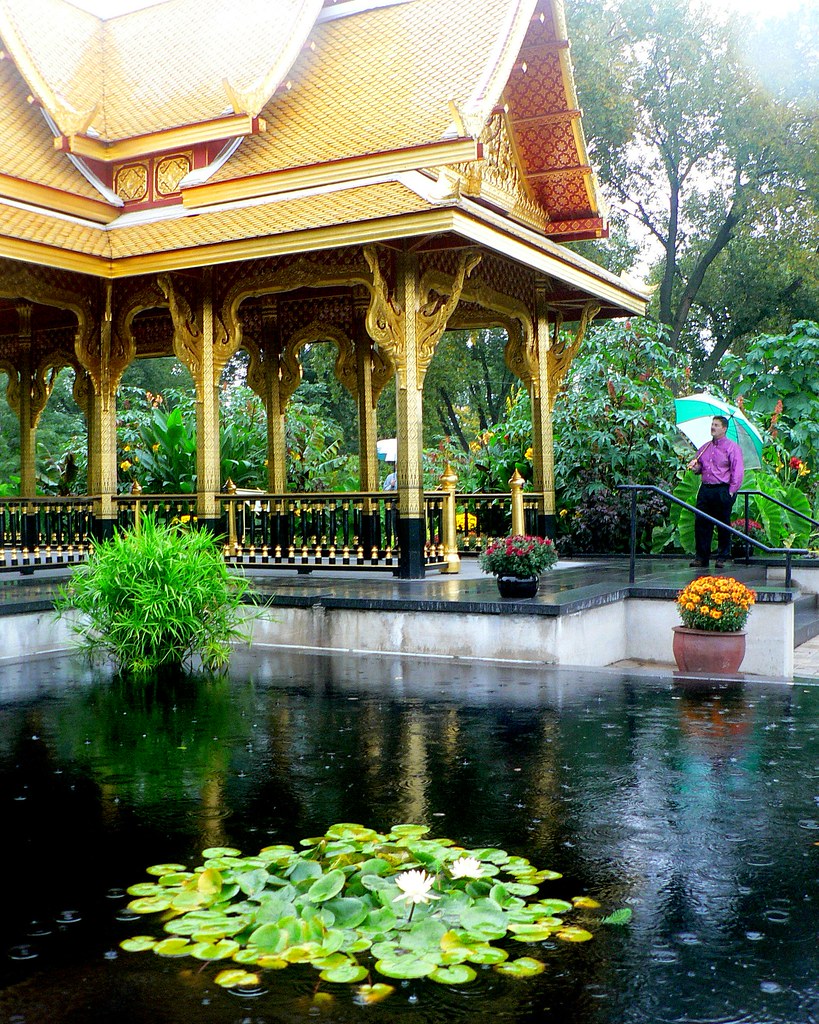
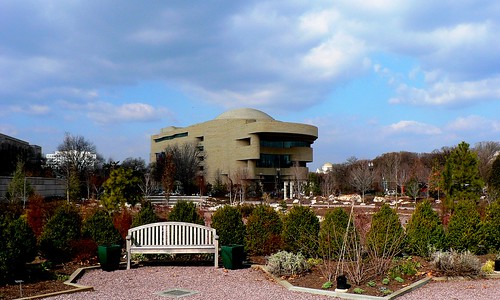 Looking at the American Indian Museum from the new outdoor garden at the US Botanic Garden, you almost lose the sense that you are in a city. It looks like a pretty cool place. I was curious, but we were too early for most of the public buildings to be open. A colleague from Arizona, who visits DC fairly often, has been inside and says it is very nice. I'll try to get back some time when I have more time.
 We finished with a visit to the several statues that sit down the hill from the Capitol Building, facing the Mall. There's an equestrian statue of General US Grant, staring west towards the Washington Monument. There is a wide, shallow pool, steps and a terrace. There are lions on either side of the general, lying regally. There is also a group of bronze Civil-War soldiers in the midst of battle. One has fallen, another leads the charge.
 I'm amazed to find myself at Thursday evening with no blog posts since the start of the week. The NSGIC Conference can be a brutal week, with days filled completely with meetings and information. I've had little time or energy left to post.
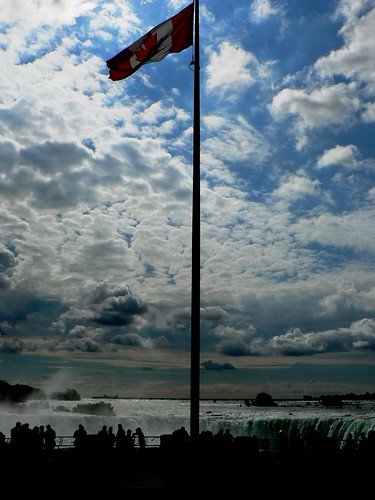 I had been to Niagara Falls for a very brief visit back in the fall of 2005 as part of that year's NSGIC Conference. I knew then that I wanted to bring Karen and the girls back for a bit longer stay. This time, we had an evening and a full day to check things out.
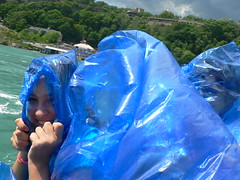 Of course we also rode the Maid of the Mist, which ferries visitors up river and as close to the Falls as is prudent. Each passenger is given a blue plastic poncho. When the wind is up, as it was on our visit, these ponchos are a challenge to control. And it is the case that once into the thick spray below the falls, photography is impossible. But this trip is always worth the wetting.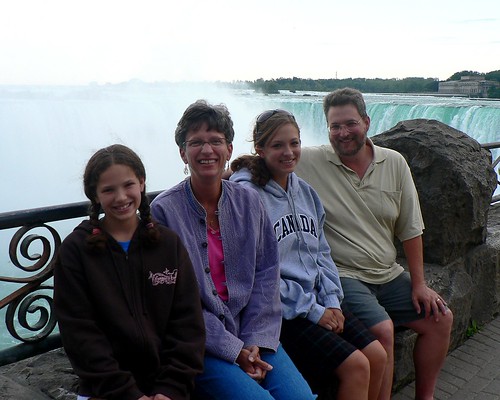
So much for the new “Delaware 141 Spur” being an actual spur. Instead the “Spur” is a relocated Delaware 141 mainline. Why is it so difficult to get the nomenclature right in the state of Delaware?And he has many thoughts about the highway signs that have been replaced along upstate highways.
Not only are new signs installed everywhere, but the signs installed display exactly the same thing that the editions in which they replaced did! I believe DelDOT was quoted as stating that each sign costs between $25,000 to $50,000 each in 1997, and that cost most certainly has gone up since that time. So with that kind of expenditure, was it necessary to replace 80% of the guide signs along Interstate 95 north from Delaware 141 to U.S. 202 given the fiscal crisis?I was interested to note that he also calls attention to the use of "Must Exit" on some signs in Delaware instead of the "Exit Only" that appears to be a highway signage standard; at least based on the the surprised looks I read about here and in other Delaware highway rants.
Julie: Here's the exit.I did a little desultory Googling this morning on this "Must" vs "Only" thing. I was unable to find any definitive "standard" language that sets one as the right verbiage to use. I did find a marvelously incomprehensible discussion of research on highways and exits at the Federal Highway Administration's Highway Research Center. It may be in there, but please don't make me read any more of that. If there are any highway engineers in the audience, please leave a polite note correcting me.
Me: Why does it say "Must Exit" instead of "Exit Only?"
Julie: Because this is Delaware, and Delaware is stupid.
 I saw this sign at the Disney Downtown Marketplace in Orlando. We had a chance to have a walk around the place after a full day of meeting last week.
